Semantic Control Platform · Robotics
Confidential — 2026

The machine
that learns you.

Software that learns each person's own words for how they want a machine to move — smoother, gentler, tighter — and adapts to that person over time.

In one sentence: it's the intelligence that goes inside other companies' robots, so each robot learns its one user and becomes truly theirs.

One brain · any robot · learns each person
— and adapts that machine to that person over time
Presented by Bobby Brooks

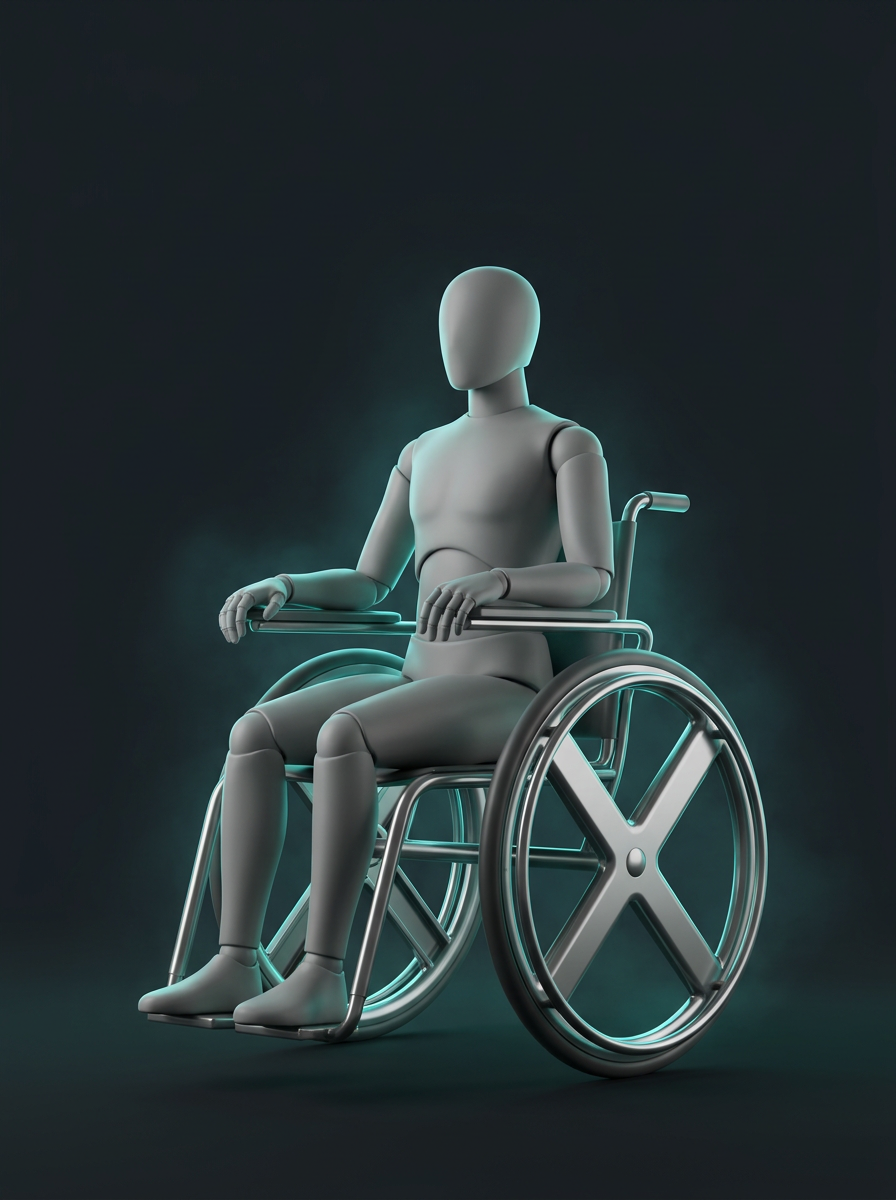
A mannequin in a wheelchair — the platform's intelligence learning the chair
What changed — and what's missing

In 2023, robots learned to understand us.
They still don't adapt to us.

The big leap everyone saw — Google's robot-and-language models — let a robot hear "pick that up" and do it. Impressive. But it is the same robot, behaving the same way, for every single person who talks to it.

Today's voice robotics

It follows a command

The robot understands an instruction and carries it out. The words mean the same thing for everyone. Your "gentler" and my "gentler" get the exact same motion. The machine never gets to know you, and it never changes for you.

Our software

It learns the person

The same word means something different to every person. Our software learns what you mean by "smoother," remembers it, and tunes the machine to you. The more you use it, the more it becomes yours. That is the missing piece.

Where we fit

Machines that help people —
and learn them.

There is a whole field built on one idea: a machine that helps a person has to be personal to that person to truly work. It was pioneered at USC. The newest direction in that field is letting people shape the machine with plain language — exactly what our software does, brought to how the machine physically moves.

Today's wheelchairs and assistive arms read a joystick, an eye-tracker, or a switch. None of them learn the user's own words for how they want to move. Ours does.
Where we start

A wheelchair that learns your language.
An arm that learns how you like it to move.

For someone living with a disability, the difference between a machine that fights them and one that understands them is independence and dignity. This is where we begin — because it matters most, and it's the clearest place to prove it. But the platform reaches much further.

Getting around
Powered wheelchairs
The chair learns each rider's words and feel for turning, speed, and stopping — set to them, not a factory default.
Reaching & holding
Assistive robot arms
Reaching, gripping, and handing things over the way this person wants — "slower into the cup," "softer when you hand it to me."
Everyday living
Prosthetics & care robots
The same learning software personalizes movement across every kind of assistive machine — one platform, many devices.
How far it reaches

Not just wheelchairs and arms —
any robot a person works with.

Inside robotics alone the reach is huge. The same software learns a person's preference for almost any robot they operate or rely on. Assistive is where we start; this is the wider robotics world it fits.

Assistive & mobility robots
Powered wheelchairs, exoskeletons, prosthetic limbs — adapting to the one person who lives with them.
Where we start
Humanoid robots
The new wave of human-shaped robots that have to work alongside real people — and feel right to each one.
Robotics reach
Industrial arms & cobots
Factory robots tuned to each operator's hand and pace, not a single locked-in default.
Robotics reach
Warehouse & logistics robots
Fleets that adapt to the people working beside them instead of forcing people to adapt.
Robotics reach
Surgical & medical robots
Instruments tuned to how each surgeon wants them to move — personal, precise, theirs.
Robotics reach
Service, home & mobile robots
Care and companion robots that learn the person they serve and get more useful over time.
Robotics reach
How it works

You talk. It learns. It remembers.

01
You speak naturally
"Smoother." "A little tighter." "Too much." Plain words — no menus, no setup screens, no engineer needed.
02
It understands what you mean
It turns your words into the right change in how the machine moves — a sensible guess the first time, sharper every time you react.
03
It learns you, person by person
Every user gets their own settings. One person's "gentle" never speaks for another. It gets more personal the more it's used.
04
It can follow you
What it knows about you lives in the software, not the machine — so it can move with you to your next device.
It's real today — not a slide. The same software already runs a live robot arm you can talk to: say "smoother" or "set it down gently," and watch it adapt to you in real time.
The market

A wave that's already arriving.

An aging world, a deepening shortage of caregivers, and robots finally good enough to help — the demand is real and growing fast.

$18B→$85B
Assistive robots
2026 → 2033
$3.9B→$9.8B
Elder-care robots
2026 → 2033
2 Billion
People over 60
by 2050
Any maker
Our software fits
any robot
Why it's different

Everyone is racing to make robots act.
We make them adapt.

What we're looking for

Partners, people,
and a first pilot.

Partners
Robot makers
Companies building assistive and other robots who want our learning software inside their machines.
People
A founding team
Talented engineers and operators who want to help build this into a category-defining company.
Capital
Early investors
Backers who see that the next breakthrough isn't a smarter robot — it's a robot that knows you.
The financials

How it makes money,
and how it grows.

A robot maker sells the machine once. We earn every month it runs — a recurring software license for each machine using our brain. Recurring costs require recurring revenue, so it's built as a per-machine subscription the maker folds into their product.

Stream 1
Per-machine license
A monthly fee for every machine running our software, paid by the maker.
Stream 2
Per-user upgrades
Premium personal-learning tiers for individual users who want more.
Stream 3
Enterprise & fleets
Volume agreements with large makers and care providers running fleets.
ScenarioMachines running itOur revenue / year
Early20,000$6.0M
Growing100,000$30M
Strong400,000$120M
At scale1,000,000$300M

Illustrative at $25 per machine per month — final pricing is set with each partner. Even one million machines is a sliver of a market heading past $85 billion, and every one of them pays us every month it runs.

Intellectual property

Protected.
Patent pending.

A provisional patent application has been filed. The core method is protected as a trade secret and is not disclosed here. Full details are shared only under a signed NDA.

The next breakthrough isn't a smarter robot.
It's a robot that knows you.

For the first time, a machine can learn each person's own language for how they want it to move — and become truly theirs. It works today. We're building the company that brings it to the world.

Bobby Brooks  ·  bbthemixmaster@gmail.com  ·  (818) 376-9966

Confidential · Patent-Pending · Do not share without a signed NDA